


Pokemon cards are made by printing artwork onto layered cardstock, then cutting, finishing, and packing the sheets into decks. Paper structure, printing, and finishing each change how a card feels, shines, and holds up in play. This guide follows the production line from design to a sealed pack, and shows how to tell a real card from a fake.
1. What Are the Steps to Make a Pokemon Card?
Making a Pokemon card takes about a year, and it runs from concept and art in Tokyo to printing, cutting, and packaging at a specialized facility. IGN’s walkthrough of Creatures, Inc. describes the work as all-hands: game data designers, illustrators, play testers, and marketing staff all take part. The steps below follow that flow, from the design table to a sealed pack.
From concept to a printed sheet
The process starts with new game mechanics and characters from the latest video games, which decide what a new set contains. Designers then pick the Pokemon that will feature in the set, weighing popular characters against the needs of the game.
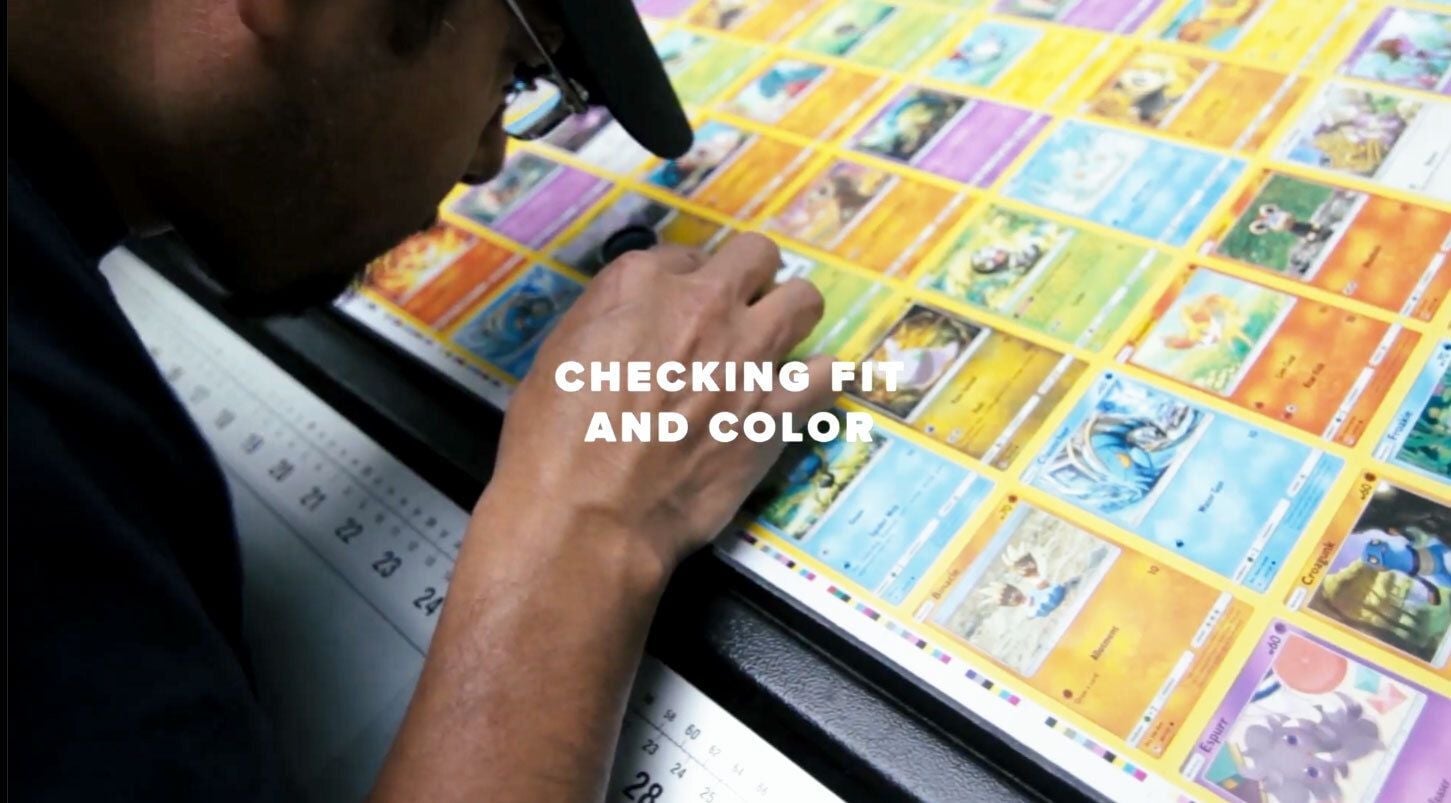
Once the card list and art are set, the text (names, moves, and attributes) is typed directly onto blank cards on screen, then checked card by card before anything is printed. From there, cards move into printing, cutting, and packaging.
- Concept and new mechanics from the latest games
- Choose featured Pokemon and create the artwork
- Playtest and balance the set
- Lay out text and images, then proof each card
- Print, cut, and pack the decks
The whole cycle takes about a year from start to finish for a new set. [S04] The steps are sequential, so a mistake in an earlier stage, such as an unbalanced set or a mis-typed card, carries through to print.
2. Who Designs Pokemon Cards and How Does the Artwork Get Made?
Pokemon cards are designed in Japan by Creatures, Inc., the company that develops the Trading Card Game, working with a large pool of illustrators. BBC Newsround reports that about 240 artists illustrate the cards for the company. The artwork is not a single style; it comes from digital drawing, painting, and photographs of physical models.
Where the artwork comes from
Some cards use cartoon-style digital drawings, some begin as paintings or computer models, and others are photographs of clay models of the characters made in real life. That mix is why card art can look very different from card to card, even within one set.
A Pokemon Card Game director described the design work as research first: how Pokemon interact, move, and show emotion, then a deck list that keeps the set balanced and playable. Designers also keep the cards consistent with the video games and the TV show, which are the two other pillars of the brand.
Balancing the set
Cards are playtested extensively before release, and competitive play can change how the next set is built. Once the set is settled, each card’s text and stats are laid out and checked individually for errors on screen.
3. What Are Pokemon Cards Made Of?
Pokemon cards are printed on layered cardstock rather than ordinary paper. Standard cards are made from a black core layer sandwiched between two printed faces, and that black core is what stops the artwork on one side from showing through the other. The black core used for this kind of card is usually about 300gsm.

Layered cardstock and the inner core
A trading card is built from a printed face and back wrapped around a middle layer, called the core. The core gives the card its stiffness and hides the reverse artwork. Cards that feel stiff and block light usually have a darker, denser core.
The printed surface carries the artwork, and a clear coating protects it from wear and handling. Holo and textured cards add a foil or textured layer on top of the print; Kotaku describes those textured cards as the hardest part of the card to reproduce. For how paper and plastic decks compare in feel and durability, see plastic vs paper playing cards.
4. How Are Pokemon Cards Printed?
Pokemon cards are printed in bulk on large sheets, then cut into individual cards. Like most TCG cards, Pokemon uses commercial offset printing for mass production. A leaked internal video from The Pokemon Company, reported by Kotaku, shows the process running from a text list of names and moves all the way to packed product, with huge sheets of cards fed into cutting machines. Before printing, each card is checked on screen for mistakes.
5. What finishing processes do Pokemon cards use?
Pokemon cards use several finishing processes on top of the print, including a laminated holofoil layer, texture, and protective coatings. One process runs separately from normal printing: on holographic cards, a holofoil layer is laminated onto the card stock. These finishes give cards their shine and their different feel in the hand.
Holofoil lamination

A standard card is a printed sheet; a holographic card adds a holofoil layer laminated onto the stock. That extra layer is why a holo card catches light and shifts color as you tilt it, while a normal card stays flat. It also makes the card harder to fake, since the foil and texture are built into production rather than added on top.
Texture and protective coating
Textured cards carry a raised pattern matched to the artwork, and Kotaku describes every ripple and line as laid out individually on computer. A clear coating on the printed surface protects it from wear and handling during play.
The finishing step is also a quality risk: borders, color, and surface finish are checked after cutting so the deck stays consistent. For the coat and foil options available on custom decks, see our finishing options.
6. How can you tell real Pokemon cards from fake ones?
The quickest way to spot a fake is to compare texture, construction, and print quality with a card you know is real. Authentic cards are built from multiple layers of card stock, while fakes are often cheaper single-layer print jobs. Kotaku notes that textured cards are usually “the easiest giveaway for crappy fakes,” because the raised pattern is difficult to copy.
Check the card as an object
A real card has a printed face and back around a layered core, which gives it a certain stiffness and a clean edge when viewed from the side. Because genuine cards have that black core, a real card blocks light far better than a fake built on a single white layer. Fakes made from a single layer tend to feel flimsier and look pure white or plasticky along the edge.
Check the surface and the print
Genuine textured or holographic cards carry a raised pattern that is laid out individually and matched to the artwork, so it is hard to reproduce at home. Fakes often look overly glossy, feel slippery, or show blurry or misaligned print.

The most reliable check is a side-by-side comparison with a verified card of the same set, ideally under a light and at an angle. Readers often ask how to check a card before buying; the safest answer is to compare it against a known real card rather than rely on any single test. If you are printing your own collector or promo cards, custom trading card printing explains the materials and finishes that go into a deck.
FAQs
Can I make Pokemon cards at home?
You can print and cut out card-shaped items at home. Although it cannot replicate the exact holographic effect and paper texture, it does not prevent enthusiasts from making them themselves. You can refer to this article to make cards at home: How to Make Playing Cards
Where are English Pokemon cards printed?
English-language Pokemon cards are built from text lists sent by the Japanese card makers and assembled for the English-speaking market before printing. The Pokemon Company International works with a dedicated card manufacturer, Millennium Print Group, for Western card production.
Who designs Pokemon cards?
Pokemon cards are designed at Creatures, Inc. in Japan, the company that develops the Trading Card Game. About 240 artists illustrate the cards, and the art comes from digital drawing, painting, and photographs of physical models.
START YOUR PROJECT
launch your own game card?
EZRA supports over 100 types of holographic coating patterns and 100 types of photolithography patterns, and offers 300gsm black core cardstock as an option. MOQ from 200 decks/1000 booster packs.


