Includes
- Folding game board
- Cards
- Tokens
- Dice
- Pawns
- Rulebook
- Insert
- Rigid game box
Premium Custom Card Decks for Brands, Publishers, Designers, and Creators. Discuss Your Project →
Knowledge Base
Printing Academy

About Us
We grow with our customers, supporting each other along the way
Our Company
Contact & Careers
Manufacture custom board games with your own artwork, game boards, cards, tiles, tokens, dice, and player pieces. Order prototypes or small batches for testing, or request full production with custom components, boxes, inserts, assembly, and packaging.
Explore common board game formats produced with custom boards, cards, tiles, tokens, miniatures, and other game components.

Includes

Includes

Includes

Includes
In addition to the common formats above, we support custom card dimensions, special shapes, custom corner radii, and project-specific dielines.


Do you need a customized template? Our design team can create corresponding card templates based on your specific requirements for your use.
Choose from hundreds of cardstock and specialty paper options to achieve the right feel, stiffness, and opacity for your deck.
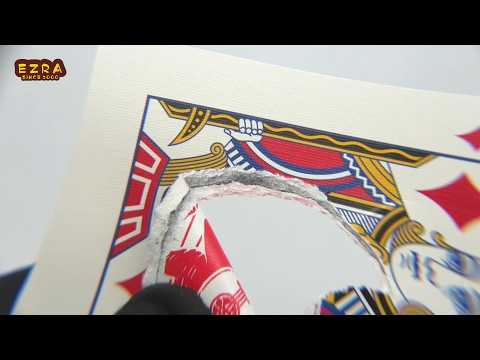
Black Core Cardstock Video
▶German-made black core cardstock provides high opacity, consistent thickness, and reliable handling during repeated use. Available with a smooth or linen surface, it is commonly selected for playing cards, tarot cards, game cards, magic decks, and other projects where light blocking and card feel matter.
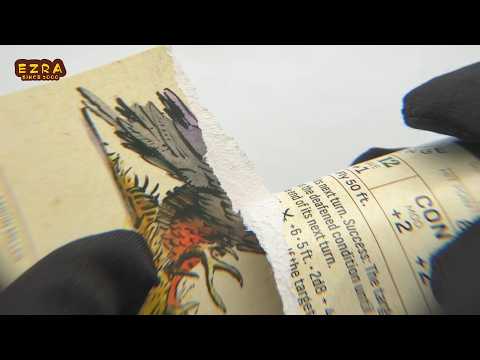
White Core Cardstock Video
▶White core cardstock is an economical and versatile material with good color reproduction and a broad range of available weights. It is less opaque than blue or black core cardstock, making it better suited to flash cards, learning cards, inserts, promotional decks, and projects where maximum light blocking is not required.
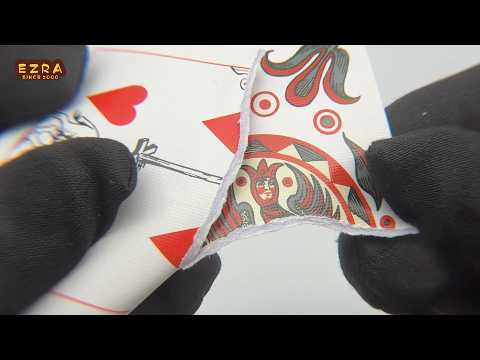
Blue Core Cardstock Video
▶Blue core cardstock offers a practical balance of opacity, flexibility, print quality, and production cost. It blocks more light than white core while remaining suitable for a wide range of commercial card projects, including game cards, tarot and oracle decks, promotional cards, and standard retail products.
PVC Cards Video
▶PVC is a waterproof and tear-resistant alternative to paper cardstock. It withstands frequent handling, moisture, and cleaning, but feels and shuffles differently from paper cards. Available colors, transparency, printing methods, and surface effects depend on the selected PVC specification.


Recycled cardstock contains recycled paper fibers and has a natural appearance that may vary slightly between production batches. It provides a more sustainable option for custom cards while supporting standard printing and selected finishing processes. Printed samples are recommended when exact color reproduction is important.


Metallic film-laminated cardstock combines a paper cardstock base with a reflective gold, silver, or colored metallic film. The metallic surface remains visible through printed areas unless white ink or another blocking layer is used, allowing the material to become part of the artwork.
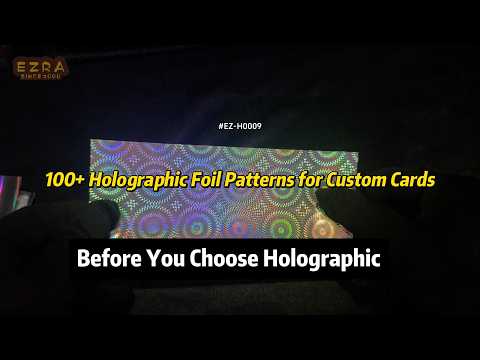
Holographic Paper Video
▶


Holographic film-laminated cardstock combines a paper cardstock base with a rainbow or patterned holographic film. The effect changes with light and viewing angle and can remain visible across the full card or be controlled with white ink and printed artwork layers.


Textured specialty paper has a visible and tactile surface formed during paper production. Unlike standard linen playing-card stock, these papers may feature felt, laid, woven, fiber, or other decorative textures. Fine artwork and small text should be tested because heavier textures can affect print detail.
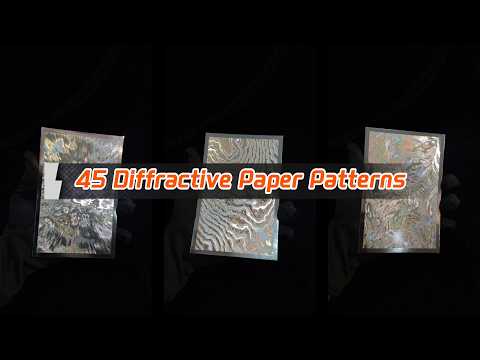
Diffractive Paper Video
▶


Diffractive film-laminated cardstock uses a micro-structured optical film to produce directional light movement, depth, and angle-dependent patterns. It creates a stronger and more controlled visual effect than standard rainbow holographic film and is mainly used for premium or limited-edition card projects.
Folding cartons, rigid boxes, drawer boxes, and specialty structures.


Printed instructions, tarot interpretations, game rules, and inserts.
Configure your specifications
Upload artwork
Artwork review
Printing and quality control
Shipping
Submit project requirements
Confirm specifications and quotation
Produce and approve samples
Production and quality inspection
Assembly and shipping


Get campaign samples, production planning, stretch-goal finishing options, bulk manufacturing support, and up to 6% project pricing support.
The MOQ depends on the components included in your game. Board games made mainly from printed components generally start from around 300 sets. Custom dice, wooden pieces, plastic parts, miniatures, or special packaging may have separate MOQ requirements.
The cost depends on the number of components, materials, sizes, finishes, packaging, assembly requirements, and order quantity.
A card-based game with a rulebook and standard box will usually cost less than a game containing a folding board, punchboards, custom dice, wooden pieces, miniatures, or a molded insert. Larger production quantities generally reduce the cost per game.
Yes. We can produce a single prototype or a small batch for gameplay testing, photography, exhibitions, Kickstarter campaigns, or internal review.
Prototype production may use digital printing and sample-making methods, so some materials or finishes may differ from the final mass-produced version.
A prototype is mainly used to check the game structure, artwork, component sizes, packaging, and overall presentation. It is suitable for testing, reviews, and campaign photography.
A pre-production sample is made after the final specifications have been confirmed. It is used to check the final materials, printing, finishes, components, assembly, and packaging before mass production begins.
Your game mechanics, rules, component quantities, and basic structure should be stable before entering mass production.
We can help review print files, component specifications, materials, packaging, and manufacturability, but gameplay development and testing should normally be completed by the game creator before final production.
Please provide a component list showing what is included in each game.
For each component, include the quantity, size, material, thickness, printing requirements, finish, and any special packing instructions. You should also provide the expected order quantity, box type, and any custom pieces or tooling requirements.
Please provide separate print-ready files for each component, such as the game board, cards, punchboards, player boards, rulebook, box, insert, and packaging.
PDF files are preferred, although AI and PSD files can also be reviewed. Artwork should normally be prepared in CMYK at 300 DPI with the required bleed, cut lines, and safe areas. Special finishes should be supplied as separate, clearly named layers or files.
We can manufacture complete board game sets containing printed and non-printed components.
Available components include game boards, cards, punchboards, tiles, tokens, player boards, rulebooks, score pads, dice, wooden pieces, plastic pieces, acrylic parts, miniatures, inserts, bags, and custom game boxes.
Yes. We can produce custom dice, printed or shaped wooden pieces, acrylic components, plastic parts, resin pieces, and miniatures.
The production method depends on the material, shape, quantity, color requirements, and level of detail. Complex plastic pieces and miniatures may require 3D files, engineering review, molds, and physical samples.
In many cases, yes.
Standard components can usually be sourced without custom tooling. Fully customized dice, plastic pieces, miniatures, metal components, or molded inserts may require molds or setup tooling. These components may also have a different MOQ from the printed parts of the game.
Yes. We can manufacture, count, sort, assemble, and pack the components as a complete finished game.
This can include placing cards and tokens into bags, loading components into inserts, adding rulebooks, packing everything into the game box, shrink-wrapping, applying labels, and preparing master cartons for shipment.
Production time depends on the number of components, materials, finishes, tooling, assembly, and order quantity.
Simple printed games may be completed faster, while projects containing custom dice, wooden pieces, plastic parts, miniatures, or complex packaging require more time. Most complete board game projects take approximately 30–60 days after all files, specifications, tooling samples, and pre-production samples have been approved. Shipping time is not included.