- CardstockBlack-core, blue-core, or standard art cardstock
- FinishSmooth varnish, linen finish, matte, or gloss
- Size63 × 88 mm and other standard or custom sizes
- MOQOnline configurations or custom bulk production
Premium Custom Card Decks for Brands, Publishers, Designers, and Creators. Discuss Your Project →
Knowledge Base
Printing Academy

About Us
We grow with our customers, supporting each other along the way
Our Company
Contact & Careers
We manufacture playing cards for game publishers, crowdfunding creators, promotional buyers, distributors, and cardistry brands. Offset production, in-house finishing, and packaging assembly under one roof in Dongguan, China.
Get a quick price for common card specifications through the EZRA online card quotation platform.

Need more printing and finishing options? Discuss with our printing team. Advanced custom production starts from 300 decks.

Who We Manufacture For
Game Publishers and Crowdfunding Creators | Brands and Promotional Buyers | Distributors and Retail Buyers | Cardistry, Magic, and Collector Decks
Choose a standard poker, bridge, mini or large format, or request a custom dieline for a specialized deck.


Do you need a customized template? Our design team can create corresponding card templates based on your specific requirements for your use.
Choose from hundreds of cardstock and specialty paper options to achieve the right feel, stiffness, and opacity for your deck.
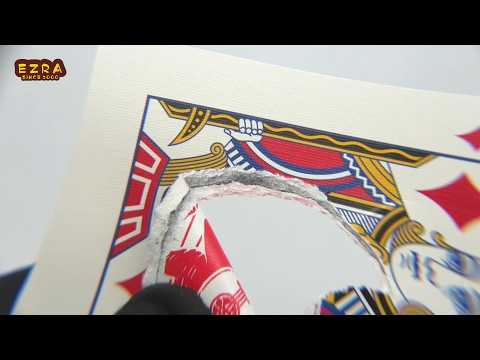
Black Core Cardstock Video
▶German-made black core cardstock provides high opacity, consistent thickness, and reliable handling during repeated use. Available with a smooth or linen surface, it is commonly selected for playing cards, tarot cards, game cards, magic decks, and other projects where light blocking and card feel matter.
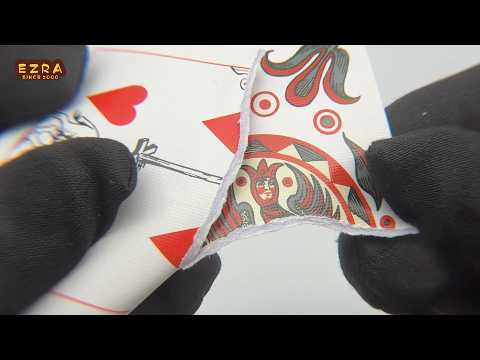
White Core Cardstock Video
▶White core cardstock is an economical and versatile material with good color reproduction and a broad range of available weights. It is less opaque than blue or black core cardstock, making it better suited to flash cards, learning cards, inserts, promotional decks, and projects where maximum light blocking is not required.
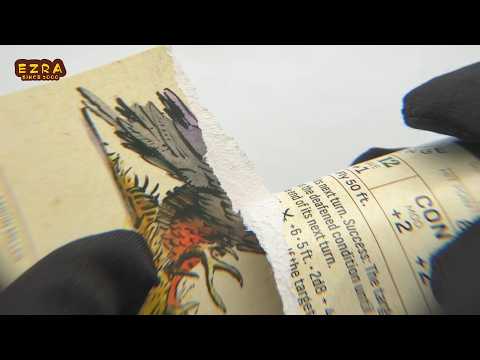
Blue Core Cardstock Video
▶Blue core cardstock offers a practical balance of opacity, flexibility, print quality, and production cost. It blocks more light than white core while remaining suitable for a wide range of commercial card projects, including game cards, tarot and oracle decks, promotional cards, and standard retail products.
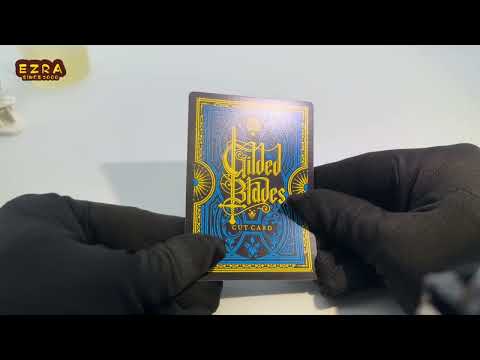
PVC Cards Video
▶PVC is a waterproof and tear-resistant alternative to paper cardstock. It withstands frequent handling, moisture, and cleaning, but feels and shuffles differently from paper cards. Available colors, transparency, printing methods, and surface effects depend on the selected PVC specification.


Recycled cardstock contains recycled paper fibers and has a natural appearance that may vary slightly between production batches. It provides a more sustainable option for custom cards while supporting standard printing and selected finishing processes. Printed samples are recommended when exact color reproduction is important.


Metallic film-laminated cardstock combines a paper cardstock base with a reflective gold, silver, or colored metallic film. The metallic surface remains visible through printed areas unless white ink or another blocking layer is used, allowing the material to become part of the artwork.
Holographic Paper Video
▶


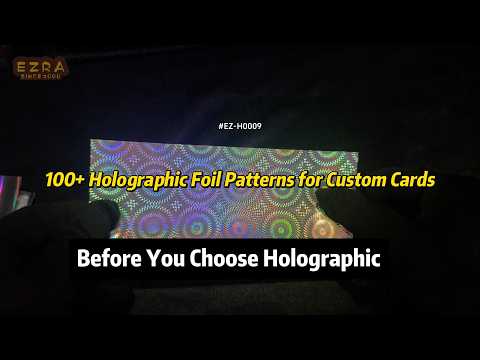
Holographic film-laminated cardstock combines a paper cardstock base with a rainbow or patterned holographic film. The effect changes with light and viewing angle and can remain visible across the full card or be controlled with white ink and printed artwork layers.


Textured specialty paper has a visible and tactile surface formed during paper production. Unlike standard linen playing-card stock, these papers may feature felt, laid, woven, fiber, or other decorative textures. Fine artwork and small text should be tested because heavier textures can affect print detail.
Diffractive Paper Video
▶


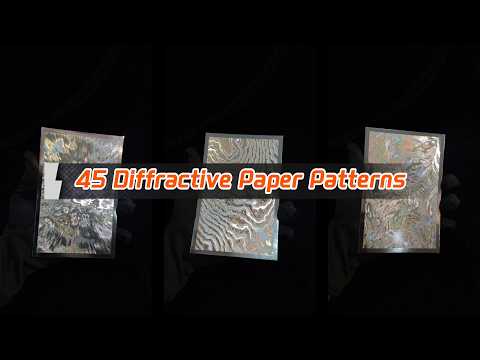
Diffractive film-laminated cardstock uses a micro-structured optical film to produce directional light movement, depth, and angle-dependent patterns. It creates a stronger and more controlled visual effect than standard rainbow holographic film and is mainly used for premium or limited-edition card projects.

600+ edge foil colors and patterns available, including holographic, gold, silver, and custom effects.

Lamination options include holographic lamination and other finishes for different visual, tactile, and protective effects.

Special effects inks available, including fluorescent, pearlescent, thermochromic, optically variable, and phosphorescent inks.

600+ cold foil colors and patterns available, including metallic, gradient, textured, and custom effects.

Supports flat foil stamping and embossed foil stamping with 600+ foil colors and custom effects.

Supports spot UV, reverse UV, overall UV, and textured UV effects.

Custom raised and recessed textures available with different patterns and depth levels.

Varnish options include cardistry varnish, matte varnish, and gloss varnish for different surface effects and visual results.

Precision die-cutting for custom card shapes, puzzle pieces, windows, inserts, and specialty packaging.

Integrate NFC, magnets, metal elements, and other components into interactive cards and premium packaging.

Soft, velvet-like flocking creates a distinctive tactile surface for premium cards, packaging, and collector editions.
Folding cartons, rigid boxes, drawer boxes, and specialty structures.


Configure your specifications
Upload artwork
Artwork review
Printing and quality control
Shipping
Submit project requirements
Confirm specifications and quotation
Produce and approve samples
Production and quality inspection
Assembly and shipping


Get campaign samples, production planning, stretch-goal finishing options, bulk manufacturing support, and up to 6% project pricing support.
Minimum order quantity depends on how the deck is produced, not on order value. There is no fixed minimum for standard-size decks ordered through our online platform at app.ezracard.com. Projects using specialty materials, decorative finishes, or custom packaging start from 300 decks.
Offset bulk production becomes economical from 500 decks, which is where most retail, wholesale, and crowdfunding runs sit. If your quantity falls between 300 and 500, send us the specification — which process wins at that volume depends on how many finishing passes the deck needs rather than on quantity alone.
Unit cost is driven by quantity, packaging structure, the number of finishing passes, and cardstock, usually in that order. Digital printing suits runs of 1–300 decks and starts from $15 per deck. Offset printing becomes more economical from 500 decks, with lower unit costs and better color consistency as quantity rises.
Packaging is the cost buyers most often underestimate. A rigid or magnetic box can cost more than the cards inside it, while a standard tuck box is the cheapest structure by a wide margin. If you have a fixed target unit cost, tell us before we quote and we will show you which specification combinations fit it.
For standard specifications you can price the job yourself in a few minutes at app.ezracard.com. For specialty materials, custom packaging, or bulk volumes, send us the specification and we will quote directly.
Bulk custom production generally takes 10–45 days after sample approval, excluding shipping. The range is driven by the number of finishing processes and the packaging structure rather than by quantity. A 5,000-deck order in a standard tuck box can move through production faster than a 1,000-deck order with gilt edges and a rigid magnetic box.
Standard decks ordered through our online platform are usually produced within one week, with selected configurations available in as little as one day.
Yes. Our online quotation platform at app.ezracard.com prices standard specifications instantly. Select card size, card count, cardstock, finish, packaging, and quantity, and you get a price and a production estimate without waiting for a sales reply. You can place the order directly from the same configuration.
The instant quote covers standard sizes, common cardstocks, standard deck configurations, and stock packaging. Custom sizes, plastic cards, cardistry and magic decks, specialty finishes, custom packaging structures, retail-ready assembly, and bulk volumes are quoted by our production team, because those specifications need a feasibility and tooling review before a price is meaningful.
Most buyers use both: the online quote to set a budget baseline, then a production quote to price the final specification.
Prototype digitally, produce offset. Digital printing carries no plate setup, so it is the better economic choice below roughly 300 decks and the fastest way to check artwork, color direction, and card feel. Offset carries a setup cost that amortizes across the run, so unit cost drops sharply from 500 decks and color holds more consistently across large runs and reorders.
One caution: a digital proof will not predict the offset result exactly, because the two processes have different color gamuts, and specialty inks and foils are only available on offset. If brand color accuracy matters, approve on an offset pre-production sample rather than on a digital proof.
Yes. You can request a free sample pack and pay only the shipping cost. For bulk custom projects we produce a physical pre-production sample on the actual cardstock and finishing line before mass production begins, so the deck you approve is the deck that ships.
On decks with gilt edges, foil stamping, or specialty inks we treat this step as necessary rather than optional. Edge foil in particular is applied to the cut block after trimming, which magnifies any variation in card thickness or cutting accuracy, and it is the finish most likely to cause a reject at inspection.
For cardistry, magic, and collector decks, black-core linen cardstock with a cardistry coating is the usual recommendation. The black core keeps the deck opaque under stage and camera lighting, and the coating provides the snap and controlled glide these decks are judged on.
For photo decks and promotional runs, smooth or linen blue-core cardstock with a matte or gloss coating covers most requirements at a lower cost. For casinos, pools, and high-frequency handling, use PVC. Most first projects do not need specialty substrates such as metallic, holographic, or diffractive paper, and the budget is usually better spent on packaging or a single well-executed finish.
Yes. We manufacture tuck boxes, window boxes, drawer boxes, tins, plastic boxes, rigid and magnetic book-style boxes, booster packs, hanging tuck boxes, POP display boxes, and die-cut specialty structures in-house, and we assemble, shrink wrap, and carton-pack to retail requirements.
Confirm the deck specification before the packaging dieline is drawn. A standard deck holds 54–56 cards, but card count and stock caliper together determine final deck thickness, which determines box depth. Artwork built to the wrong dieline has to be redrawn, and it is one of the most common causes of delay on a first project.
Tell us at quoting stage if the deck is going into retail. Barcodes, hang tabs, shrink wrap, and carton marking are inexpensive to plan and expensive to retrofit once production has started.
Yes. We keep your approved production sample, color reference, and packaging dieline on file, and reorders are matched against the approved physical sample rather than only against the digital file. This is the distinction that matters for distributors and retail buyers: matching the file still allows drift between runs, matching the sample does not.
Supply print-ready PDF files for the cards, packaging, and booklet where applicable, built on our templates with the correct bleed, safe zones, and CMYK color. Download the templates for your deck size before starting artwork.
Two checks before you submit. Convert RGB artwork to CMYK yourself rather than leaving the conversion to prepress, and check the black build — rich black and 100% K print very differently, and the difference shows most on card backs and box panels.